Followers

Saturday, July 12, 2025

Mount Kailash: A Sacred Journey Through Tibet’s Spiritual Heart


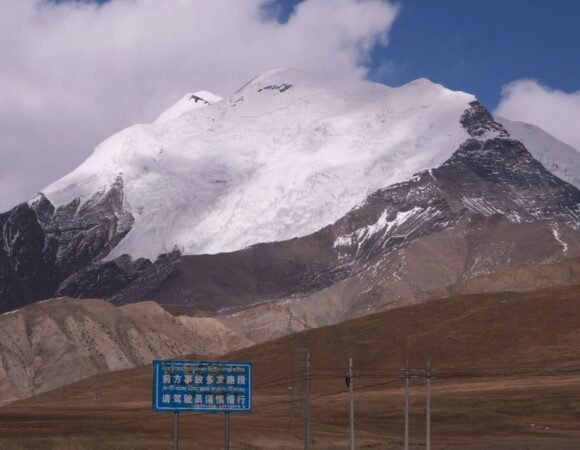
Tibet is a nation of mystery and beauty, with many intriguing sights to explore. Mount Kailash, on the other hand, is a must-see on every Tibet vacation.  This magnificent peak climbs above 6600 meters and has never been scaled. It is filled with mystery, spiritual meaning, and a vibrant cultural atmosphere. Trekking Mount Kailash allows you to immerse yourself in Tibetan culture and religion while also pushing your physical ability and endurance to the maximum.

Investigate the religious significance.

Mount Kailash holds significant value for four major faiths in Tibet. This is where hundreds of ardent religious people gather to do the sacred trip around the mountain.

There are several intriguing myths about this mystery mountain. Mount Kailash is Shiva's seat for Hindus, while Rishabdev reached Nirvana here for Jains. In Tibetan Buddhism, the mountain is revered as the majestic home of Chakra Samvara Demchog and the famous Tibetan yogi Milarepa.

Although the beliefs differ, the consequence is the same: Kailash Trekking China is regarded as sacred and holy, and so cannot be ascended. Instead, pilgrims gather to do a 'kora', a clockwise circuit around the mountain's base. During your tour, you will observe the locals' deep-rooted customs and ways of life.


Meet the Most Devoted Pilgrims in the World

One of the highlights of climbing Mount Kailash is getting to know the people you're trekking with. Use the prostration spots and camping areas to meet individuals who are accompanying you on the trip. You will be able to hear firsthand the experiences and lives of pilgrims who visit this sacred location. And I'm not just talking about Tibetan pilgrims; ardent Buddhists and Hindus from India, Japan, and other countries travel to Mount Kailash Trekking to complete their kora in the hopes of washing away their sins. You will also likely meet other hikers from all around the world, and learning about their experiences will enrich your journey.

A Guide To Kailash Mansarovar Yatra for a Traveller


The Kailash Tour is an unforgettable spiritual experience. Perhaps it is a soul-fulfilling trek that brings the pilgrims good luck, fresh beginnings, and numerous benefits. Whether it's the Kailash Parikrama or the Kailash Mansarovar trek, each step draws you closer to the heavenly Kailash Mansarovar.

Significance of the Kailash Mansarovar Yatra

The Kailash Mansarovar Yatra is considered one of the holy pilgrimages for Hindus. Kailash Mansarovar holds immense significance for Hindus since it is considered to be Lord Shiva's dwelling. The peak is important to both Buddhists and Jains.

Quick Tips for Kailash Yatra Preparations

Mount Kailash is 6638 meters above sea level. It's a high-altitude yatra that requires careful planning. Remember these easy tips for a hassle-free and safe travel. 

Physical Fitness

The Yatra is a high-altitude Kailash Trekking that requires physical fitness. We urge that you do breathing techniques like pranayama and meditation to avoid any health issues during this voyage.

Pack Light And Smart.

The weather in Kailash is variable. As a result, we recommend that you carry medications, warm clothing, hiking shoes, and a portable oxygen cylinder.

Keep emergency contact information ready, including local guides and medical contacts. Are you planning a trip to Kailash Mansarovar Yatra soon? You may select budget-friendly packages to make your yatra a relaxing and spiritually uplifting experience.

Navigating the Kailash Mansarovar Yatra Routes

There are two routes for the Kailash Mansarovar Yatra from India: the Lipulekh Pass route and the Nathu La Pass route.

The Lipulekh Pass trail involves hiking of around 200 km.

The Nathu La Pass route requires only 40 km of hiking, with the remainder completed by bus.

Pilgrims are chosen at random and based on their physical fitness. The Yatra prices change year after year.


Pilgrims, on the other hand, find the Nepal route quite convenient. There is a helicopter route that starts in Lucknow and lasts between 5 and 11 days. The overland trek from Kathmandu takes around 14 days.

The Nepal route is the easiest and most convenient way to complete your Kailash Tour China. The yatra begins at the Hilsa-Kyirong border. This route has nice and clean rest spots. 

Clients Travel Stories: Armin and Victoria Tibet Travel Experiences

Three Reasons for Traveling Tibet in a Group


The most common approach to tour Tibet is as part of a group. In addition to low pricing, what additional benefits can you expect from a group visit to Tibet? In this Tibet Group Tours guide, we'll look at five convincing reasons why it's an excellent choice for travellers looking to explore the fascinating terrain of this sacred region.

Furthermore, we will go over how to choose your perfect Tibet vacation and how to schedule a group tour to Tibet. Allow yourself to become immersed in Tibet's rich culture, breathtaking scenery, and spiritual legacy, resulting in amazing experiences that will last a lifetime.

Tibet does not allow free, independent travel

In Tibet, overseas visitors are not permitted to move freely. Tourists visiting Tibet must join organised tour groups booked by authorised travel firms. These groups can be made up of just you and your family/friends or a group of tourists with a specific departure date.

Tibet Group Tours is the cheapest method to travel in Tibet

Joining a Tibet group tour, like any other group tour, provides considerable savings on travel expenses. Tibet has never been considered a low-cost tourism destination. However, joining a group trip is the most cost-effective method to visit Tibet. You may even save up to 30% on private excursions.

Sharing expenditures allows you to save money while travelling to Tibet with a tour group. Accommodation, transport, and guides are shared by the group, lowering per-person prices. This means you may experience all of Tibet's treasures, from the awe-inspiring Potala Palace to the majestic Everest Base Camp, without spending a fortune.


Travelling in small groups is safer.

Many travellers, particularly women, are concerned about their safety when going into foreign countries. While Tibet is normally a highly secure area, choosing small group travel for Tibet Group Tours China can give added protection and a sense of camaraderie for ladies interested in discovering unknown Tibet. It provides a safer and more suitable option for female travellers. This allows you to experience the stunning night views of the Potala Palace while also taking advantage of the plateau's nightlife.

Monday, June 9, 2025

Know About Planning a Tibet Motorcycle Tour

No right-minded motorcyclist would pass up the opportunity to go over the enormous Tibetan plateau on a motorbike. For motorbike riders, nothing beats the sensation of Road trips to Tibet across the Tibetan plateau, passing vast dry plains and high-altitude passes in the Tibetan plateau and the Himalayas. The Tibet motorbike trip is the most exciting tour you will ever do in Tibet. Nothing surpasses the feeling of riding freely on the open road with the wind in your face, thus this trek across the roof of the globe is the pinnacle of riding adventures.


Motorcycle Route in Tibet

Once you've acclimatized, you should test the motorcycles you'll be riding. A fast excursion to Ganden Monastery or around the vicinity will help you familiarise yourself with the bike and the landscape for Tibet motorbike tours, as well as how it feels to ride at high altitude. Even after acclimatization, a thinner environment causes slower reflexes and response times. As a result, before driving on the region's major highways, you must become acquainted with the routes and your response times. Lhasa has an elevation of 3,656 meters and is not the highest place in Tibet that you will visit.

Lhasa

The voyage begins in Lhasa by going west on the G318 and S307 to Gyantse, which is traditionally the first halt on the journey across the plateau, 263 km away. Gyantse, located near Lake Yamdrok (4,441 m), is home to the breathtaking Kumbum Stupa and is around 4,000 meters above sea level. The road from Lhasa to Gyantse is average, with no gravel or dirt sections for paved roads.

Mount Everest Base Camp

Mount Everest is approximately 340 kilometers from Shigatse by road, while the direct trip is substantially shorter. There is also an elevation gain of about 1,400 meters between Shigatse and Everest Base Camp (EBC). The path takes you over some of Tibet's highest crossings across the Himalayan highlands, including the Gyatso La Pass (4,528 meters) and the Gawu La Pass (5,198 meters). The paved road finishes at Rongbuk Monastery, which is a few km from the base camp. The final section of the journey to EBC is on dirt roads. This is also where you may hike to the base camp for Tibet motorcycle tours and enjoy the breathtaking views as the mountain approaches.


Follow our Facebook and Twitter for more information about our product.


Mount Kailash Trekking: One of the World’s Greatest Overland Trips


Pilgrims from all across Asia go over the breathtaking high-altitude terrain of rural Western Tibet to pay tribute and stroll around the sacred peak. Kailash trekking tour is one of the world's best overland journeys, and despite the elevation, it is surprisingly accessible.

Kailash derives much of its strength from its remarkable physical position, a lone peak cut off from the main Himalayan range in Tibet's Kangdise Mountains. The unique four-sided mountain rises abruptly from the surrounding plain, its four sides facing the cardinal directions. Four of Asia's largest rivers, the Indus, Sutlej, Brahmaputra, and Karnali, originate in its foothills.

For Tibetans, this is where the Tantric magician Milarepa defeated his Bön foe Naro Bönchung in an epic fight of sorcery, establishing Buddhism's dominance over the old Bön faith. For Hindus, Kailash is the home of Shiva and his spouse, Parvati. Both Buddhists and Hindus see Kailash as the fabled Mount Meru, the universe's center axis. The 6474m mountain is so sacred that no one has climbed it to date. Motorcycle tours in Tibet are a great adventure.

What to see near Kailash

Lake Manasarovar, located at the foot of Mt Kailash, is a breathtaking high-altitude lake revered by Tibetans and Hindus alike. Pilgrims trek around the lake in four days, but it is now feasible to drive around it, stopping at the picturesque lakefront monasteries of Seralung, Gossul, Trugo, and Chiu.

A day's journey from Kailash will take you to Thöling Monastery and the remains of Guge, a 10th-century Buddhist state that used adjacent Kashmiri and Ladakhi influences to produce some of the Himalaya's most beautiful Buddhist art. Exploring the paintings, tunnels, and hilltop castle of the old Guge capital at Tsaparang is one of Asia's most memorable experiences. Plan a three-day return journey from Kailash, taking in the stunning Silk Road-style cave paintings at Dungkhar and Piyang along the way.


It's tempting to make the lengthy journey to Mt Kailash with as few stops as possible, but it's worth stopping en route at crag-top Drapsang Monastery, beautiful Dargyeling Monastery, and historic Tradun Monastery (just outside Drongba), all of which are located between Lhatse and Mt Kailash. You must opt for the Best way to travel to Tibet.

Clients Travel Stories: Armin and Victoria Tibet Travel Experiences

Tuesday, May 13, 2025

Why Choosing a Local Tibet Travel Agency Makes All the Difference

Choosing local allows you to share rather than simply view. When you select a Tibet tour company, you pick to engage with and be accompanied by locals whose families, lives, and hearts are inextricably linked to the locations you will see. Locals have an unprecedented depth of cultural knowledge and direct experience to give, including a thorough understanding of Tibetan culture. When you pick local, you'll have the opportunity to visit anything from meadows to monasteries. Locals are more willing to share their homes, backyards, and places of worship rather than tourist sites.


Plan Your Tibet Tour

Planning a trip to Tibet can be a difficult undertaking, but with the assistance of a local Tibetan travel operator, it can become a rewarding and unique experience. Tibet is a unique and intriguing location that combines breathtaking natural beauty, a rich cultural legacy, and spiritual importance. A native Tibetan travel firm can provide personalized services and guide you through the challenges of traveling in Tibet.

When organizing your Tibet journey, you must consider the optimal season to visit, which is normally from May to October as per the Tibet Travel Guide. This time is great for visiting famous places such as Lhasa, Shigatse, and Namtso Lake, since the favorable weather allows for easy travel and sightseeing. Furthermore, it is essential to explore and learn local customs and traditions to have a respectful and meaningful experience. By using a local Tibetan travel operator, you can guarantee that your schedule is personalized to your specific interests and that you obtain a better understanding of the local culture.

Tibetan Travel Permit and Documents

To visit Tibet, you must get a Tibet Travel Permit, which is provided by the Tibet Tourism Bureau. All international travelers must get this permit before entering China's Tibet Autonomous Region. In addition to the permission, you will need to secure a Chinese visa and other required paperwork.


Working with a local Tibet Travel Agency can help streamline the permission application process because they have significant knowledge and expertise with the relevant documents. The firm may advise on the necessary paperwork, such as a valid passport, visa, and travel insurance. Entrusting this process to a local firm ensures that all of your documentation is in place, enabling you to enjoy your Tibet trip experience.

Exploring the Roof of the World through Culture, Religion, and Ancient Heritage


The Tibet Autonomous Region, abbreviated as "Tibet," is situated in the south-western region of the People's Republic of China, on the south-western half of the Qinghai-Tibet Plateau, sometimes known as the "Roof of the World." Tibet, with an average elevation of about 4,000 meters, is known for its distinct geological characteristics and natural sceneries. The region also has a unique set of social and cultural attractions, including over 2,700 temples at its historical height. Your Visit in Tibet is full of experience.

Religious Culture

Tibet is well-known across the globe for its distinct religious beliefs and rich cultural traditions, making it a brilliant jewel in China's cultural treasure trove. Buddhism and Tibetan Buddhism combined and grew on this strange and beautiful region, while traditional Tibetan culture was conserved and flourished, resulting in Tibet's own religious beliefs and cultural traditions.

Tibetan Buddhism includes beliefs on reincarnation, karma, liberation, and compassion. Everyone's ultimate objective is to acquire Buddhahood, hence Tibetan Buddhism's primary idea is the redemption of all creatures. You must get your visa for Tibet.

Tibetan culture and religion are inextricably linked, and religious culture may be seen in many facets of Tibetan life, such as dress, art, and architecture. Tibetan devotees' rituals, such as pilgrimage, chanting, and releasing animals, allow people to interact with deities while demonstrating reverence and devotion.

Tibetan religion is more than simply a religious conviction; it is an essential aspect of Tibetan people's life. It has a significant effect on Tibetan culture, social structure, and the spiritual lives of the people. It instills in individuals a sense of respect for environment and peace while also offering spiritual comfort and support. In the face of adversity, it gives the Tibetan people immense faith and optimism.

Cultural Heritage

Tibet has been steeped in mystery since ancient times, and the outside world knows nothing about it. Those who have had the opportunity to visit this region are enthralled by its spectacular and wonderful natural environment. Tibet is huge and abundant in resources, and its inhabitants have developed a magnificent Tibetan culture. You will explore this during your Tibet cultural tour. The Guge Kingdom is one of Tibet's most fascinating civilizations, with its previous magnificence now veiled in quiet ruins. The remnants of the Gyantse Dzong, situated on a rock, observe the vicissitudes of history as the sun sets. The largest royal tombs, the Tombs of the Tibetan Kings, document the Tibetan Empire's growth and demise across millennia.

Explore the Roof of the World: Essential Tibet Trekking Tips

Tibet, located on the world's roof, is unlike any other hiking paradise! Tibet, with its majestic Himalayan peaks, tranquil valleys, and...